
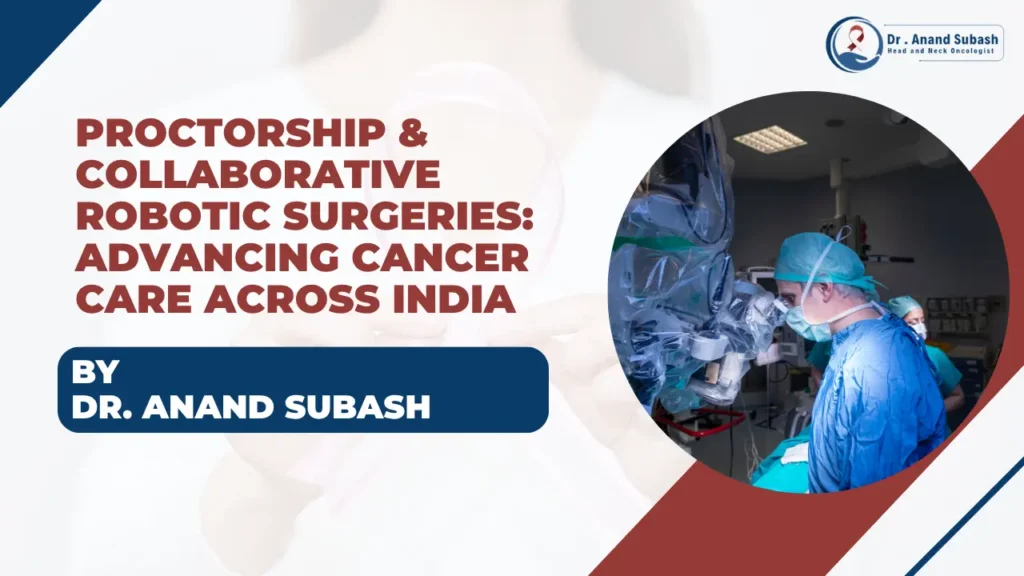
Robotic-assisted cancer surgery is transforming the future of oncology treatment in India. Over the last few months, Dr. Anand Subash has actively participated in multiple proctorship programs and collaborative robotic surgeries across leading healthcare centers, supporting surgeons and medical teams in adopting advanced robotic techniques using the EDGE Robotic System. As the Best Robotic Head & Neck Cancer Surgeon in Bangalore, Dr. Anand Subash continues to contribute toward improving surgical precision, patient safety, and access to world-class robotic cancer care across the country.
What Are Proctorship Programs in Robotic Surgery?
Proctorship programs are specialized surgical training and mentoring initiatives where experienced robotic surgeons guide healthcare professionals in performing complex robotic-assisted procedures safely and effectively. These collaborations play a crucial role in helping hospitals and surgical teams integrate cutting-edge robotic technology into routine cancer treatment.
Through these collaborative surgeries, surgeons gain hands-on expertise in:
- Advanced robotic surgical techniques
- Precision-based tumor removal
- Minimally invasive cancer procedures
- Robotic navigation and instrumentation
- Improved surgical planning and execution
The ultimate goal is to improve patient outcomes while making advanced cancer care more accessible across India.
How EDGE Robotic System Is Changing Cancer Surgery
The EDGE Robotic System is designed to enhance surgical accuracy and provide better visualization during complex cancer procedures. By enabling highly controlled movements and minimally invasive techniques, robotic systems help surgeons perform delicate surgeries with greater confidence.
Patients undergoing robotic-assisted cancer surgery often experience:
Robotic systems allow surgeons to operate with enhanced dexterity and magnified 3D visualization, especially in delicate head and neck cancer procedures.
● Minimally Invasive Procedures
Smaller incisions mean less trauma to surrounding tissues, reduced blood loss, and minimal scarring.
Advanced robotic technology supports better control during surgery, reducing the risk of complications in many complex cancer cases.
Patients generally experience shorter hospital stays, quicker healing, and an earlier return to daily activities.
Precision-based robotic surgery may improve functional outcomes, especially in cancers involving speech, swallowing, and facial structures.
Importance of Collaborative Robotic Cancer Surgeries
Collaborative surgeries bring together experienced robotic surgeons, oncologists, anesthetists, and healthcare teams to share expertise and improve treatment standards. These initiatives help hospitals adopt advanced techniques more efficiently and ensure patients receive high-quality cancer care closer to home.
According to many surgical experts, collaborative robotic training is essential for:
- Expanding robotic cancer care in India
- Standardizing advanced surgical practices
- Improving surgeon confidence and expertise
- Enhancing multidisciplinary cancer treatment
- Reducing the learning curve for robotic surgery adoption
As the Best Robotic Head & Neck Cancer Surgeon in Bangalore, Dr. Anand Subash believes that knowledge sharing and collaborative learning are key to improving long-term patient outcomes.
Robotic Surgery in Head & Neck Cancer Treatment
Head and neck cancers often involve highly sensitive anatomical structures that affect speech, swallowing, breathing, and appearance. Robotic-assisted surgery offers greater precision while preserving critical functions wherever possible.
Robotic surgery can be beneficial in selected cases involving:
- Oral cancer
- Tongue cancer
- Throat cancer
- Oropharyngeal tumors
- Laryngeal cancers
- Neck tumors
With increasing adoption of robotic systems, more patients now have access to advanced minimally invasive treatment options.
Patients searching for the Best Robotic Head & Neck Cancer Surgeon in Bangalore often look for surgeons with extensive experience in robotic oncology, collaborative surgical expertise, and advanced cancer management.
Building the Future of Robotic Cancer Care in India
India is rapidly emerging as a global destination for advanced robotic cancer surgery. The growing adoption of robotic systems across hospitals is helping improve treatment precision and patient care standards nationwide.
By participating in proctorship programs and collaborative robotic surgeries, Dr. Anand Subash continues to support the expansion of robotic oncology services and train healthcare teams in delivering safer, more effective cancer treatment.
As the Best Robotic Head & Neck Cancer Surgeon in Bangalore, his focus remains on combining innovation, surgical excellence, and patient-centered care to deliver the best possible outcomes.
Why Patients Choose Robotic Cancer Surgery
Many patients today prefer robotic-assisted procedures because of the benefits associated with minimally invasive techniques, including:
- Reduced postoperative pain
- Smaller surgical scars
- Lower risk of infection
- Shorter hospital stays
- Faster recovery
- Improved quality of life after surgery
However, the suitability of robotic surgery depends on several factors, including the type and stage of cancer, overall health condition, and treatment goals.
FAQs
1. Who is considered the Best Robotic Head & Neck Cancer Surgeon in Bangalore?
Patients often look for surgeons with extensive experience in robotic oncology, advanced surgical expertise, and successful outcomes in head and neck cancer treatment. Dr. Anand Subash is known for his involvement in robotic cancer surgeries, collaborative surgical programs, and advanced minimally invasive procedures.
2. What are the benefits of robotic surgery for head and neck cancer?
Robotic-assisted surgery offers greater precision, smaller incisions, reduced blood loss, faster recovery, enhanced patient safety, and improved functional outcomes in selected cancer cases.
3. Is robotic cancer surgery safe?
Yes, robotic surgery is generally considered safe when performed by experienced robotic oncology surgeons. The technology provides enhanced visualization and precise surgical control, helping improve surgical accuracy.
4. How long does recovery take after robotic cancer surgery?
Recovery time varies depending on the type of cancer and procedure performed. However, many patients undergoing robotic-assisted surgery experience shorter hospital stays and quicker recovery compared to traditional open surgery.
5. Why are collaborative robotic surgeries important in cancer treatment?
Collaborative robotic surgeries help surgeons share expertise, improve surgical techniques, train healthcare teams, and expand access to advanced robotic cancer care across different hospitals and regions.
Conclusion:
Robotic-assisted cancer surgery is reshaping the future of oncology treatment in India. Through proctorship programs, collaborative surgeries, and continuous innovation, experts like Dr. Anand Subash are helping expand access to advanced robotic cancer care across the country.
If you are searching for the Best Robotic Head & Neck Cancer Surgeon in Bangalore, consulting an experienced robotic oncology specialist can help you explore advanced minimally invasive treatment options designed for precision, safety, and faster recovery.