
A thyroid nodule is a lump or abnormal growth in the thyroid gland, located at the front of the neck. While discovering a lump can be worrying, most thyroid nodules are non-cancerous. However, proper evaluation is important to identify nodules that may require further investigation or treatment. Consulting a Thyroid Cancer Surgeon in Bangalore can help patients understand the available diagnostic tests and determine the appropriate next steps.
Not every thyroid nodule requires surgery or a biopsy. The tests recommended depend on the nodule’s size, ultrasound appearance, thyroid hormone levels, symptoms, and individual risk factors.
1. Physical Examination and Medical History
The first step is usually a clinical examination. The doctor checks the neck for lumps, assesses the thyroid gland, and examines nearby lymph nodes for unusual swelling. Your medical history is also important. The doctor may ask about previous radiation exposure, thyroid disorders, family history of thyroid cancer, changes in your voice, or difficulty swallowing. These details help determine whether additional tests are necessary.
2. Thyroid Function Blood Tests
Blood tests help evaluate how well your thyroid gland is functioning. The most common initial test is thyroid-stimulating hormone (TSH). Depending on the results, the doctor may recommend additional tests, including free T4 and sometimes T3, to assess thyroid hormone levels.
It is important to understand that normal thyroid blood test results do not rule out thyroid cancer. Some nodules, including cancerous ones, may not affect thyroid hormone production.
3. Thyroid Ultrasound
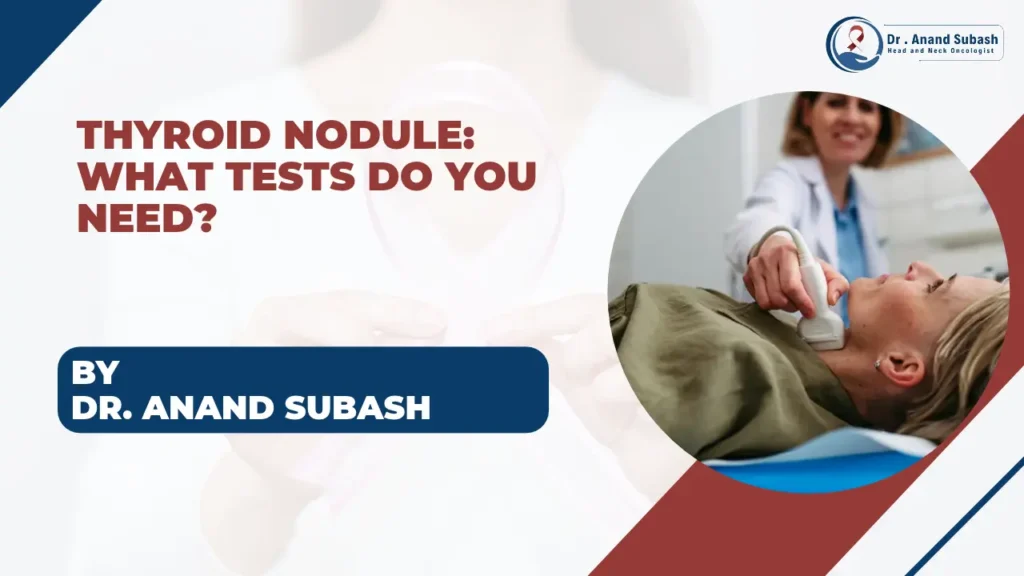
Thyroid ultrasound is one of the most important tests for evaluating a thyroid nodule. It uses sound waves to produce images of the thyroid gland without radiation.
The scan helps determine:
- The size and location of the nodule.
- Whether it is solid, fluid-filled, or mixed.
- Whether its shape, margins, or internal features appear suspicious.
- Whether nearby lymph nodes show concerning changes.
Based on these findings, the doctor can estimate the nodule’s risk and decide whether a biopsy or follow-up ultrasound is appropriate. Not every nodule needs an immediate biopsy.
4. Fine-Needle Aspiration (FNA) Biopsy
If the ultrasound shows suspicious features or the nodule meets specific criteria, a fine-needle aspiration (FNA) biopsy may be recommended. During this procedure, a thin needle collects a small sample of cells from the nodule. Ultrasound guidance may be used to improve accuracy. The sample is then examined under a microscope.
The result may indicate a benign nodule, suspected or confirmed malignancy, an indeterminate finding, or an inadequate sample requiring further assessment. An inconclusive result does not automatically mean cancer. Depending on the findings, a repeat biopsy, additional testing, monitoring, or surgery may be considered.
5. Additional Imaging and Molecular Tests
Some patients may need further investigations. If TSH levels are low, a thyroid radionuclide scan may help determine whether a nodule is overactive. CT or MRI may be considered when a large nodule extends into the chest or causes pressure on nearby structures.
Molecular testing may also be useful when biopsy findings are indeterminate. These tests examine genetic changes in the sampled cells and can help guide decisions about monitoring or surgery in selected cases.The choice of additional tests depends on the clinical findings rather than a single universal testing plan.
Conclusion:
Understanding which tests are needed for a thyroid nodule can reduce uncertainty and help patients make informed decisions. Clinical examination, thyroid function blood tests, ultrasound, and FNA biopsy are the main tools used to assess a nodule. Additional investigations are recommended only when appropriate.
Consulting an experienced Thyroid Cancer Surgeon in Bangalore, such as Dr. Anand Subash, can help you understand your reports and discuss suitable treatment options when necessary. Remember, a thyroid nodule does not automatically mean cancer, but timely medical evaluation is essential for appropriate care.
FAQ’s
No. A biopsy is recommended according to the nodule’s ultrasound features, size, and clinical risk factors. Many nodules only require monitoring.
Blood tests assess thyroid function but cannot reliably confirm or exclude thyroid cancer. Ultrasound and, when indicated, biopsy are important for evaluation.
No. Thyroid ultrasound is generally painless and non-invasive. A handheld probe is moved gently over the neck to create images of the gland.
Your doctor may recommend a repeat biopsy, molecular testing, follow-up imaging, or surgery, depending on the result and overall risk.
Surgery may be recommended for confirmed or suspected cancer, certain indeterminate nodules, or nodules causing significant pressure symptoms. The decision depends on individual clinical findings.