
In the evolving world of cancer treatment, patients no longer have to choose between effective treatment and quality of life. With the advancement of robotic-assisted surgery, it is now possible to achieve high surgical precision while ensuring better cosmetic outcomes. This powerful combination—Precision + Cosmesis—is redefining cancer care with the expertise of a Robotic cancer surgeon in Bangalore.
As a leading Robotic cancer surgeon in Bangalore, Dr. Anand Subash brings cutting-edge technology and extensive expertise to provide safer, more accurate, and minimally invasive cancer surgeries, especially in complex head and neck cases.
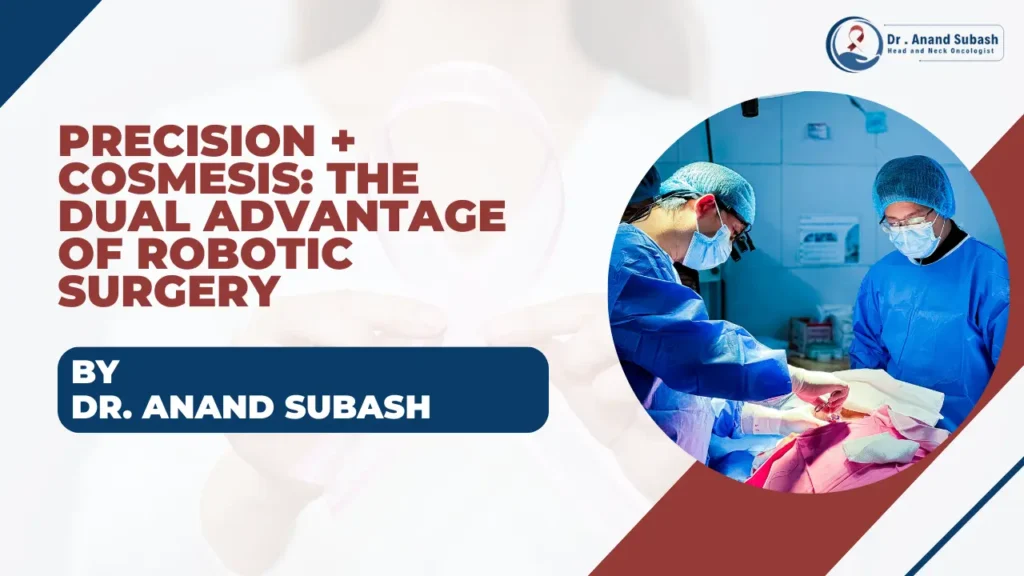
Understanding Robotic Surgery in Cancer Care
Robotic surgery is a minimally invasive technique where the surgeon operates using advanced robotic arms controlled through a console. The system provides:
- High-definition 3D magnified vision
- Enhanced dexterity and flexibility
- Tremor filtration for steady movements
- Greater accuracy in delicate anatomical areas
The Dual Advantage: Precision + Cosmesis
1️. Unmatched Precision
Robotic-assisted surgery allows surgeons to:
- Remove tumors with exceptional accuracy
- Preserve surrounding healthy tissues
- Protect vital nerves and blood vessels
- Reduce complications and blood loss
2️. Superior Cosmetic Outcomes
Traditional open surgeries for head and neck cancers often require large incisions, which may result in visible scars.
Robotic surgery offers:
- Minimal or no external cuts
- Scarless surgery (in selected cases like Transoral Robotic Surgery – TORS)
- Faster healing
- Reduced post-operative swelling
- Shorter hospital stay
Why Robotic Surgery is Transforming Head & Neck Cancer Treatment
Head and neck cancers demand extreme precision due to the complex anatomy of the region. A Robotic cancer surgeon in Bangalore uses advanced robotic systems to operate in confined spaces with enhanced visibility and accuracy.
Benefits include:
- Reduced post-operative pain
- Faster recovery
- Early return to normal diet and speech
- Lower risk of infection
- Reduced need for tracheostomy in select cases
Who Can Benefit from Robotic Cancer Surgery?
Robotic surgery may be suitable for patients with:
- Early-stage throat cancer
- Tongue base tumors
- Laryngeal (voice box) cancers
- Oropharyngeal cancers
- Selected thyroid cancers
- Benign and malignant head & neck tumors
Why Choose Dr. Anand Subash?
Dr. Anand Subash is recognized for combining:
Focus on both cure and quality of life
Advanced robotic surgical expertise
Evidence-based cancer treatment
Patient-focused care
Multidisciplinary treatment planning
Frequently Asked Questions (FAQs)
1. Is robotic surgery safe for cancer treatment?
Yes. Robotic surgery is FDA-approved and widely used for various cancers. When performed by an experienced Robotic cancer surgeon in Bangalore, it offers high precision and reduced complications.
2. Does robotic surgery leave scars?
In many head and neck procedures, especially transoral robotic surgery (TORS), there are no visible external scars because the surgery is performed through the mouth.
3. Is robotic surgery better than traditional open surgery?
Robotic surgery provides enhanced precision, minimal blood loss, faster recovery, and improved cosmetic outcomes in suitable cases. However, the best approach depends on the cancer stage and location.
4. How long is the recovery time after robotic surgery?
Most patients experience shorter hospital stays and quicker recovery compared to open surgery. Many resume normal activities sooner.
5. Is robotic surgery painful?
Patients typically report less post-operative pain due to smaller incisions and minimal tissue damage.
6. Who should consult a Head and Neck Oncologist in Bangalore?
Anyone experiencing persistent symptoms such as difficulty swallowing, voice changes, oral ulcers that do not heal, neck lumps, or unexplained throat pain should seek evaluation.
7. Is robotic surgery expensive?
While robotic surgery may have higher initial costs, reduced hospital stay, fewer complications, and faster recovery can offset overall expenses.